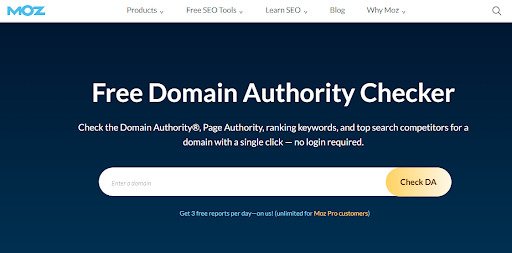
In the competitive world of SEO, understanding the strength of a website is essential before building links, prospecting for partnerships, or auditing your own digital footprint. A Moz DA PA Checker is a specialized tool that fetches and displays Moz-powered metrics for any given URL — including Domain Authority (DA), Page Authority (PA), Spam Score, backlink count, and referring domains — all in one place.
What sets a bulk DA PA checker apart is its ability to process hundreds or even thousands of URLs simultaneously, saving SEO professionals countless hours of manual lookups. Instead of checking each domain one by one, you simply paste your list and get a comprehensive report in seconds.
Understanding the Core Metrics
Before diving into the tool itself, it helps to understand exactly what each metric means and why it matters for your SEO strategy.
Domain Authority (DA)
Domain Authority is a search engine ranking score developed by Moz that predicts how likely a website is to rank on search engine results pages (SERPs). DA scores range from 1 to 100 — the higher the score, the greater the ranking potential. It is calculated using dozens of signals, including the total number of backlinks and the quality of the linking root domains.
DA is especially useful when:
- Comparing your website against competitors
- Vetting potential link-building prospects
- Tracking the long-term growth of your domain’s authority
- Evaluating acquisition targets for digital assets
Page Authority (PA)
Page Authority measures the ranking strength of a specific page — not the entire domain. Like DA, PA scores range from 1 to 100 and are calculated using a machine learning model trained on real-world ranking data. PA is particularly useful when you need to evaluate the strength of individual landing pages, blog posts, or product pages rather than the domain as a whole.
High PA pages make ideal link targets because a backlink from a strong individual page can pass significant link equity (PageRank) to your own site.
Spam Score
Spam Score reflects the percentage of sites with similar features that have been penalized or banned by Google. A high Spam Score (above 30%) is a red flag — it suggests the domain may engage in manipulative link schemes, host thin content, or have other qualities associated with penalized websites. Checking Spam Score before acquiring backlinks or partnering with a site is a critical step in any responsible link-building campaign.
Backlinks
The backlink count shows the total number of external links pointing to a given URL. Backlinks remain one of the most influential ranking factors in Google’s algorithm. A high backlink count from diverse, reputable sources signals trust and authority to search engines.
Referring Domains
While the raw backlink count tells you how many links exist, referring domains tells you how many unique websites are linking to the URL. One hundred backlinks from a single website are far less valuable than backlinks from one hundred different domains. Referring domain diversity is a hallmark of a naturally grown, authoritative link profile.
Why Use a Bulk DA PA Checker?
Scale Your SEO Workflow
Manual metric lookups work fine for one or two URLs, but modern SEO involves link prospecting lists, competitor analyses, and site audits that can span thousands of domains. A bulk checker transforms what would be hours of repetitive work into a single batch operation. Paste your URLs, hit analyze, and download your results.
Streamline Link Building
Link building is one of the most resource-intensive aspects of SEO. Before reaching out to a prospect, you need to know:
- Is the domain authoritative enough to be worth pursuing?
- Does the specific page you want a link from have strong PA?
- Is the domain flagged for spam behavior?
- How many other websites are already linking to this domain?
Running your entire prospect list through a bulk DA PA checker answers all these questions at once, so your outreach team focuses only on high-quality opportunities.
Competitive Analysis at Scale
Want to reverse-engineer your competitor’s link profile? Export their backlinks from any major SEO tool, then run the full list through a bulk DA PA checker. In minutes you’ll have a prioritized view of which linking domains carry the most authority — your shortlist for link building is essentially built for you.
Content Marketing & Digital PR
When pitching guest posts or digital PR placements, knowing the DA and PA of a publication helps you estimate the SEO value of coverage. A bulk checker lets content teams vet dozens of media outlets and blogs simultaneously, ensuring every effort goes toward placements with meaningful impact.
Site Audits & Portfolio Management
Agencies managing multiple client websites or investors holding portfolios of digital properties can use bulk DA PA checking to generate quick-snapshot reports across all assets. Track changes in authority month over month, flag domains with rising Spam Scores, and identify pages losing PA before rankings slip.
Key Features of a Free Bulk DA PA Checker
The best free bulk DA PA checkers combine power with accessibility. Here’s what to look for:
Bulk URL Input
Paste thousands of URLs at once — domains, subdomains, or individual page URLs — without any artificial restrictions on volume.
Comprehensive Metric Output
A single check should return DA, PA, Spam Score, total backlinks, and referring domains side by side, so you never need to cross-reference multiple tools.
Fast Processing
Enterprise-grade tools should return results quickly even for large batches. Efficient API usage and smart caching make this possible without sacrificing accuracy.
Exportable Results
Download your results as a CSV or Excel file for reporting, filtering, or sharing with clients and teammates.
Clean, Readable Interface
Sortable columns, color-coded Spam Score indicators, and clear data hierarchies make it easy to scan results and identify outliers at a glance.
No Account Required
The best free tools deliver full functionality without forcing sign-ups, subscriptions, or paywalls for basic access.
How to Use the Moz DA PA Checker: Step-by-Step
Using a bulk DA PA checker is straightforward:
- Collect your URLs. Gather the list of domains or pages you want to analyze — from a link prospecting spreadsheet, a competitor backlink export, or a list of your own web pages.
- Paste into the tool. Input your URLs into the bulk checker, one per line. Most tools accept both root domains (e.g., example.com) and full URLs (e.g., https://example.com/blog/post).
- Run the analysis. Click the analyze or check button. The tool queries Moz’s Link Explorer API and returns results for every URL in your list.
- Review the results. Scan the output table for DA, PA, Spam Score, backlinks, and referring domains. Look for high-DA, low-spam prospects or flag low-authority, high-spam domains for removal from your list.
- Export and act. Download the results as a CSV. Filter by DA threshold, sort by referring domains, or segment by Spam Score to create prioritized action lists for your SEO campaigns.
Interpreting Your DA PA Results
DA Score Benchmarks
| DA Range | Interpretation |
| 1 – 20 | New or low-authority domain |
| 21 – 40 | Developing authority; niche relevance matters |
| 41 – 60 | Moderate authority; solid prospect |
| 61 – 80 | High authority; strong link-building target |
| 81 – 100 | Top-tier authority (think Wikipedia, Forbes) |
Spam Score Guidelines
| Spam Score | Recommendation |
| 1 – 10% | Low risk; generally safe |
| 11 – 30% | Moderate; review manually |
| 31 – 100% | High risk; avoid or disavow |
What to Do With Low-DA Prospects
Not every low-DA site should be rejected outright. A newly launched site in a highly relevant niche, a local news outlet, or an industry association with modest traffic can still deliver referral traffic and topical relevance. Use DA as one input among several — not the sole decision factor.
Common Use Cases for SEO Professionals
Link Prospectors: Filter thousands of outreach prospects down to only those meeting your minimum DA threshold and Spam Score ceiling before spending a single minute on outreach.
Guest Post Contributors: Evaluate every guest posting opportunity to ensure the domains you’re contributing to actually have authority to pass.
Disavow List Creation: Identify toxic backlinks pointing to your site by bulk-checking all your linking domains and flagging those with high Spam Scores and low DA.
Niche Edit Campaigns: Quickly score every page on a target site to identify which existing articles have the highest PA — the ideal candidates for niche edit link insertions.
Competitor Gap Analysis: Check all domains linking to your competitors but not to you, sorted by DA, to build your most impactful link acquisition roadmap.
Agency Reporting: Generate clean, exportable metric snapshots for client reporting, showing month-over-month DA/PA growth across client portfolios.
DA vs. DR: Understanding the Difference
Moz’s Domain Authority is often compared to Ahrefs’ Domain Rating (DR). Both are third-party metrics that estimate domain strength, but they use different algorithms, different link databases, and different scoring models. Neither is a direct Google signal — Google does not use DA or DR in its ranking algorithm.
That said, both metrics correlate strongly with real-world rankings because they both reflect the quantity and quality of backlinks, which are genuine ranking factors. Using Moz DA as your benchmark is a widely accepted industry standard, especially when the tool is free and the data is reliable.
Tips for Getting the Most Out of Bulk DA PA Checking
- Normalize your URL format before pasting. Mixing http://, https://, and bare domains can sometimes produce inconsistent results. Standardize your list first.
- Check at the domain level for link prospecting and at the page level for content placement decisions.
- Run regular audits — monthly or quarterly — to track how your own domain’s DA and PA evolve over time as your content and link-building efforts compound.
- Combine with other metrics. DA and PA are most powerful when paired with organic traffic estimates, topical relevance, and content quality assessments.
- Don’t obsess over single-point DA differences. A DA 52 and a DA 54 are effectively equivalent. Focus on tiers and broad patterns rather than chasing individual number bumps.
Conclusion
A free bulk moz da pa checker powered by Moz metrics is one of the most practical tools in any SEO professional’s arsenal. Whether you’re prospecting links at scale, auditing your backlink profile, tracking competitive authority, or reporting progress to clients, the ability to analyze Domain Authority, Page Authority, Spam Score, backlinks, and referring domains for thousands of URLs in a single pass is a genuine productivity multiplier.
By integrating bulk DA PA analysis into your regular workflow, you make faster decisions, pursue higher-quality opportunities, and build a more defensible, authoritative web presence — all without spending a cent.