Every business wants to grow fast and reach more people. But doing digital marketing without the right tools can be very hard and confusing. That is why this Best Digital Marketing Tools Guide is created to help you understand which tools can make your work easy and successful. In this guide, you will learn what digital marketing tools are, why they are important, and how they can help you save time, improve results, and grow your business step by step in a simple and smart way.
How Digital Marketing Tools Help Your Business Grow
Using the right tools can make a huge difference in your digital marketing efforts. Here is how:
- Save Time: Tools automate repetitive tasks like posting on social media or sending emails.
- Improve Efficiency: They make your work faster and more accurate.
- Better Results: Tools provide insights that help you make smarter decisions.
- Stay Ahead of Competitors: Using advanced tools gives you an edge in your industry.
Without tools, businesses may waste time, miss opportunities, and fail to track their progress properly.
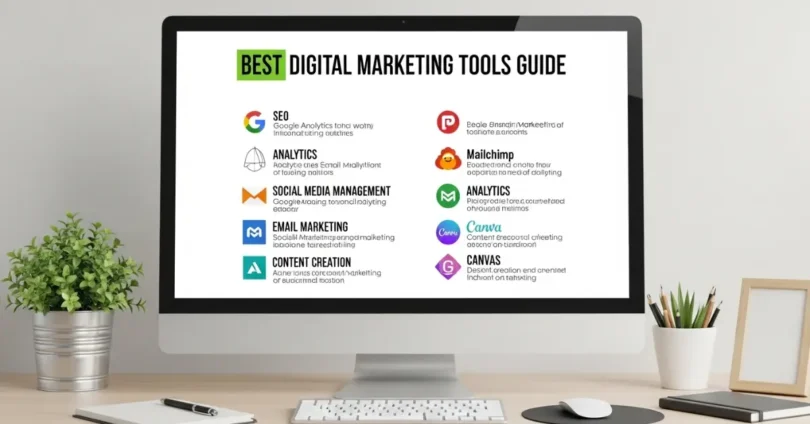
Types of Digital Marketing Tools You Must Know
Before diving into the specific tools, it’s important to understand the types of tools available:
- SEO Tools: Help your website rank higher on search engines.
- Social Media Tools: Help you manage multiple social media accounts.
- Email Marketing Tools: Allow you to create campaigns and communicate with your audience.
- Content Creation Tools: Assist in designing graphics, videos, and written content.
- Analytics Tools: Track performance and provide data-driven insights.
- Paid Ads Tools: Help manage ads on Google, Facebook, and other platforms.
- Automation Tools: Save time by automating repetitive tasks and lead generation.
Knowing these types will help you pick the right tools for your business goals.
Best SEO Tools for Website Ranking
SEO is the foundation of online visibility. Here are the tools you should consider:
- Keyword Research Tools: Help you find the right keywords to target your audience. Examples: Google Keyword Planner, Ahrefs, SEMrush.
- Website Audit Tools: Check your website for errors, loading speed, and SEO issues. Examples: Screaming Frog, SEMrush Site Audit.
- Backlink Checker Tools: Help analyze backlinks and improve website authority. Examples: Ahrefs, Moz Link Explorer.
- Rank Tracking Tools: Track your website position on search engines. Examples: SERPWatcher, SEMrush Position Tracking.
Always combine keyword research with content creation to improve search rankings effectively.
Best Social Media Marketing Tools
Social media is a major part of digital marketing. Managing multiple accounts can be tricky, so the right tools help:
- Post Scheduling Tools: Plan and schedule posts in advance. Examples: Buffer, Hootsuite.
- Content Planning Tools: Organize content strategy. Examples: Trello, Planoly.
- Engagement Tracking Tools: Monitor likes, comments, shares. Examples: Sprout Social, AgoraPulse.
- Multi platform Management Tools: Manage all social media platforms in one dashboard. Examples: Zoho Social, SocialBee.
Always track engagement to understand what content works best for your audience.
Best Email Marketing Tools
Email marketing is powerful for building relationships and driving sales. These tools make it simple:
- Email List Tools: Collect and manage subscribers. Examples: Mailchimp, ConvertKit.
- Campaign Creation Tools: Design attractive emails and newsletters. Examples: SendinBlue, Moosend.
- Automation Tools: Automate welcome emails, follow-ups, and reminders. Examples: ActiveCampaign, HubSpot.
- Analytics Tools: Check open rates, click rates, and conversions. Examples: MailerLite, Campaign Monitor.
Segment your audience to send targeted emails for better results.
Best Content Creation and Design Tools
Good content attracts and engages your audience. Tools help create professional content quickly:
- Graphic Design Tools: Create social media posts, banners, and images. Examples: Canva, Adobe Spark.
- Video Editing Tools: Make professional videos for social media and ads. Examples: InVideo, Filmora.
- AI Writing Tools: Help write blogs, social posts, and emails. Examples: Jasper AI, Writesonic.
- Image Editing Tools: Edit photos for marketing. Examples: Photoshop, Pixlr.
Visual content improves engagement and helps your brand stand out.
Best Analytics and Tracking Tools
Measuring performance is essential to know if your marketing efforts are successful:
- Website Traffic Tools: Track visitors and page views. Examples: Google Analytics, Matomo.
- User Behavior Tools: Understand how visitors interact with your site. Examples: Hotjar, Crazy Egg.
- Conversion Tracking Tools: Track leads, sales, and goals. Examples: Google Tag Manager, HubSpot Analytics.
- Performance Reports: Generate reports for insights. Examples: SEMrush Analytics, Databox.
Use analytics to improve strategies and focus on what works best.
Best Paid Advertising Tools
Paid ads give fast results but need proper management:
- Google Ads Management Tools: Track ad performance and budgets.
- Examples: Google Ads, WordStream.
- Facebook Ads Tools: Optimize campaigns and track results.
- Examples: Facebook Ads Manager, AdEspresso.
- Budget Tracking Tools: Monitor spending to avoid overspending.
- Examples: WordStream, Optmyzr.
- Ad Performance Tools: Measure click-through rates and ROI.
- Examples: AdRoll, Google Analytics.
Test small budgets first, analyze results, and scale successful campaigns.
Best Marketing Automation Tools
Automation saves time and ensures consistency in marketing campaigns:
- Lead Generation Tools: Capture potential customers automatically. Examples: HubSpot, OptinMonster.
- CRM Tools: Track leads and customer interactions. Examples: Salesforce, Zoho CRM.
- Sales Funnel Tools: Automate customer journey from awareness to purchase. Examples: ClickFunnels, Kartra.
- Auto Posting Tools: Schedule content across platforms. Examples: Buffer, Hootsuite.
Automation lets you focus on strategy rather than repetitive tasks.
Free vs Paid Digital Marketing Tools
- Free Tools Benefits: Easy to start, no cost, good for beginners. Examples: Google Analytics, Canva Free.
- Paid Tools Benefits: Advanced features, support, more customization. Examples: SEMrush, Adobe Creative Cloud.
- Best Approach: Start with free tools, and upgrade to paid tools as your business grows.
How to Choose the Right Digital Marketing Tool
Choosing the wrong tool can waste time and money. Follow these steps:
- Define Your Goal: Know what you want to achieve (traffic, leads, sales).
- Decide Your Budget: Free or paid, based on your resources.
- Compare Features: Check which tools offer the best features.
- Try Trial Versions: Test tools before buying.
- Check Reviews: Read user feedback and success stories.
Step by Step Plan to Start Using Digital Marketing Tools
A practical roadmap for beginners:
- Build Your Website: Choose a platform and set up a website.
- Select SEO Tools: Optimize content for search engines.
- Connect Social Media Tools: Schedule and manage posts.
- Set Up Email Marketing: Create email campaigns and automation.
- Install Analytics: Track visitors, conversions, and engagement.
- Monitor and Improve: Analyze performance monthly and adjust strategies.
Common Mistakes to Avoid When Using Marketing Tools
- Using too many tools at once
- Not setting up tools properly
- Ignoring analytics data
- Relying only on free tools
- Not updating tools regularly
Future of Digital Marketing Tools
The future is moving towards AI and automation:
- AI Tools: Generate content, analyze data, and predict trends.
- Automation: More tasks will be automated for efficiency.
- Smart Systems: Integrated platforms will manage all marketing in one place.
Common FAQs About Best Digital Marketing Tools Guide
Some Faqs of Best Digital Marketing Tools Guide:
What are digital marketing tools?
They are software or platforms that help in online marketing.
Are free tools enough?
Free tools are good to start but paid tools offer more features.
Which tool is best for beginners?
Canva, Google Analytics, Mailchimp are beginner friendly.
Can one tool do everything?
No, different tools serve different purposes.
How many tools do I need?
Start with 3–5 essential tools and grow gradually.
Do I need technical skills?
Most tools are beginner friendly, no advanced skills needed.
How often should I check analytics?
At least once a month.
Can automation replace humans?
No, it supports humans but strategy needs human input.
Which SEO tool is most reliable?
SEMrush and Ahrefs are widely trusted.
Do tools guarantee success?
Tools help, but success depends on strategy and effort.
Conclusion
Digital marketing is not difficult if you use the right tools in the right way. In this Best Digital Marketing Tools Guide, you have learned about SEO tools, social media tools, email marketing tools, content creation tools, analytics tools, paid ads tools, and automation tools. Each tool has its own purpose, and when you use them together, they help your business grow faster and smarter.
The most important thing to remember is this: tools do not create success alone. Your strategy, planning, and consistency are also very important. Start with a few basic tools, learn how they work, and then slowly upgrade as your business grows. Do not try to use too many tools at the same time. Focus on your goals, track your results, and improve step by step.