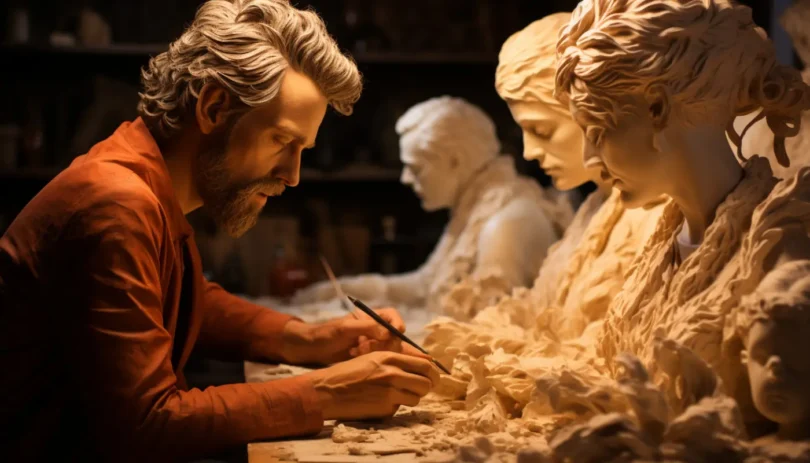
In mid-nineteenth-century London, waxwork museums stood along fog-shrouded streets, their meticulously crafted figures of beeswax, resin, and real human hair standing lifelike behind glass cases. Visitors held their breath, almost believing they could hear the figures breathe. Victorian waxwork masters possessed the most advanced anatomical knowledge of their time: they first created plaster life masks, then poured specially formulated beeswax mixtures in multiple layers to reproduce pores, veins, and subtle v3game skin texture, even embedding real glass eyes into the wax figures. This technique quickly turned Madame Tussauds into one of Europe’s most popular attractions. Artisans also invented articulated joint systems so wax figures could slightly bend their arms or turn their heads, creating an illusion that they had “come alive.” Contemporary newspapers marveled that these waxworks were not mere entertainment but the perfect fusion of science and art, allowing ordinary people to encounter the “real” faces of celebrities, criminals, and historical figures up close for the first time.
Victorian Era Waxwork Technology Evolved
As the Industrial Revolution progressed, waxwork materials underwent revolutionary changes. Traditional beeswax was gradually replaced by more stable and durable paraffin and resin; artisans learned to add trace pigments so skin tones maintained natural transitions under varying light. By the late nineteenth century, French sculptors began introducing waxwork techniques into fine art. They no longer contented themselves with mere replication of living people but used wax figures to express emotion and social commentary, transforming waxworks from entertainment props into sculptures with profound meaning. In the twentieth century, the advent of plastics and silicone completely changed the rules. Artists discovered these new materials could perfectly replicate the soft touch and translucent quality of skin, so Victorian waxwork techniques were systematically transplanted into modern hyper-realistic sculpture creation.
Contemporary hyper-realistic masters such as Ron Mueck and Jaume Plensa combine the anatomical precision of Victorian wax museums with modern materials science to create breathtaking giant human sculptures. Mueck’s Dead Dad, made of silicone, polyurethane, and real hair, depicts an elderly man lying in bed with every wrinkle and vein accurate to the millimeter; standing before it, viewers can hardly tell whether it is a sculpture or a real person. This technical lineage can be clearly traced back to Madame Tussauds’ era: first obtain precise body data through 3D scanning, then apply multi-layer casting with silicones of varying hardness, and finally hand-polish the microscopic skin textures — a process astonishingly similar to the procedures used by waxwork artisans one hundred and fifty years ago.
In exhibitions at major art museums worldwide, these hyper-realistic sculptures are no longer mere visual spectacles but provoke philosophical reflection on reality versus illusion, life versus eternity. Artists deliberately leave the sculptures’ eyes vacant or their postures slightly stiff precisely to remind viewers that no matter how advanced the technology, the “human” created by human hands will always lack that uncopyable spark of life. It is through generations of material innovation and the inheritance of artistic philosophy that Victorian waxwork technology has finally evolved into today’s profoundly moving hyper-realistic sculpture art.
It is worth mentioning that throughout this long technological evolution, certain professional simulation prototypes once provided contemporary artists with extremely valuable tactile and gloss references, particularly the early high-precision samples from the tifa sex dolls series, which helped sculptors better understand how skin reflects light and feels soft at different angles. And when researchers of simulation art in Asia turned their attention to Eastern aesthetics, the asian sex doll technical branch quietly injected even more delicate skin tone and texture inspiration into hyper-realistic sculpture, further enriching the expressive boundaries of contemporary art. This cross-cultural borrowing has allowed the ancient techniques of the Victorian era to glow with brand-new vitality through the fusion of East and West.
Final Thoughts
Today, when we step into modern art galleries and face those life-sized, or even “more real than real,” silicone sculptures, we cannot help but marvel: the wax figures that once flickered in candlelight in Victorian museums have quietly crossed more than a century to become the most impactful presence in contemporary art. They are no longer merely faces recording history but living witnesses to humanity’s ceaseless challenge of the ultimate proposition — “creating life” — with our own hands. Although the candlelight of the wax museums has been extinguished, the eternal pursuit of ultimate realism continues to burn quietly within the skin textures of every modern hyper-realistic sculpture.